

Behind The Image #2 Newsletter and Editing Video
In this second issue of the Behind The Image newsletter, I explain my thoughts before, during, and after I took the image.
This is followed by a video showing how I edited the image using ACR, Photoshop, and the TK9 action plugin for Photoshop
BTI Newsletter Number 2: The Blurred Line Between Reality and Perception
Unlike the location featured in the last issue of Behind The Image, this place required no reconnaissance.
I’ve been coming here for more than forty years.
On the first morning of my 2025 Adirondack photo trip, the plan was simple: hike Rocky Mountain and look out over Fourth Lake. I knew the lake would still be holding summer’s warmth while the autumn air cooled overnight—a perfect setup for lake fog.
I also knew the view from the cliffs near Inlet, New York, would give me a wide, elevated look at the lake and its scattered islands as the sun rose on what promised to be a bluebird day.
This mountain is woven deeply into my life.
The family of my high school best friend had a camp—and later a home—in nearby Eagle Bay. As teenagers, we climbed Rocky during the day and at night (sometimes even sober). Over the years, we climbed it again with my daughters and with my friend’s sons as they grew up.
Even now, later in life, we still make the effort to hike Rocky whenever we’re together. The memories are too strong, and the view too good, to skip it.
Because of all the hours I’ve spent sitting on these cliffs overlooking Fourth Lake, I knew there was a good chance something special would happen as the islands emerged from the fog that morning.
Memories Come Flying Back
As Caden and I hiked up the final sloping granitic slab toward the cliffs that line the southwestern edge of Rocky, we came upon a mother and daughter standing at the precipice, quietly watching a thick fog bank fill the lake far below.
I rarely photograph people, but I couldn’t resist capturing this moment.
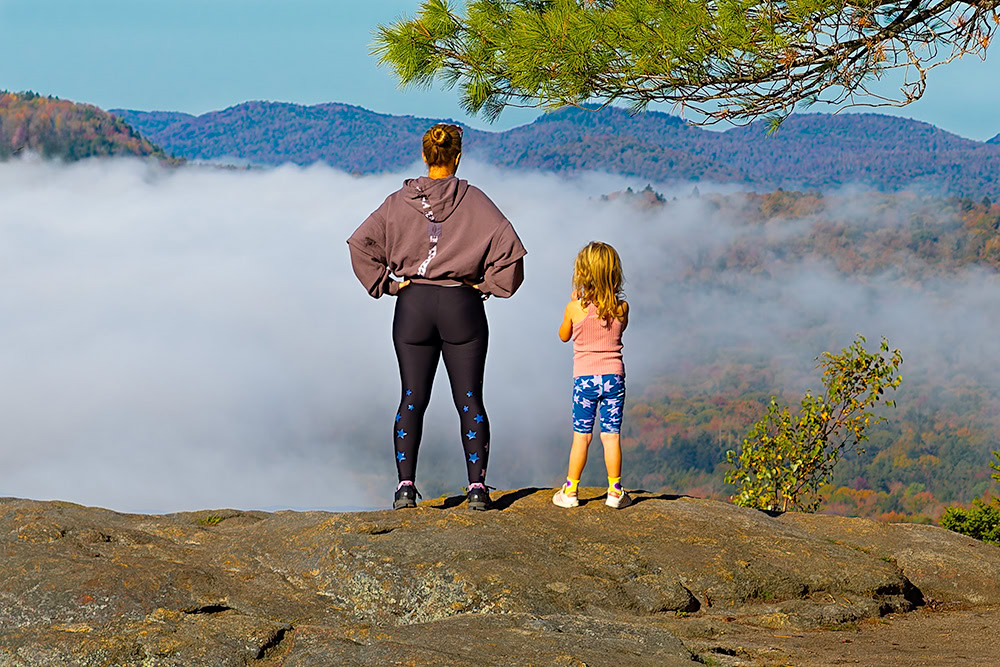
Seeing them there instantly brought back memories of myself standing on this same cliff—as a child, as a father, and as a friend—sharing this view with people I love. I knew this would be a moment both of them would remember.
Later, I got her email address and sent her the file so they could revisit it in the years to come.
Before getting into the work behind the image, I’d like to share a wider landscape view from Rocky Mountain.
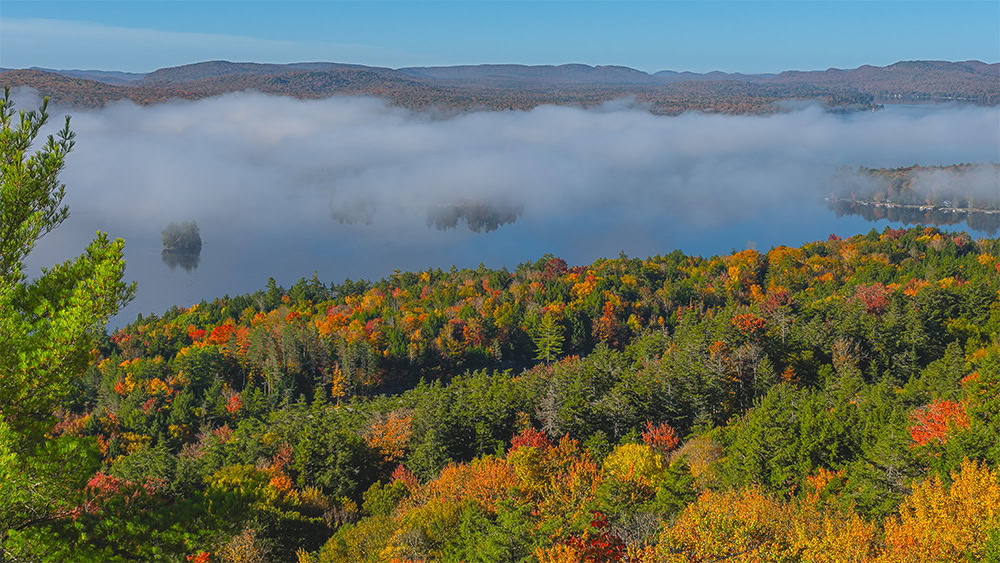
The trail to the summit is one of the busiest in the central Adirondacks. It’s short, and while there are a few steep sections, the payoff is exceptional.
The view might be the biggest return on effort anywhere in the Adirondacks—well worth the hike if you find yourself in the Eagle Bay or Inlet area.
The Work Behind the Image
There isn’t much to explain here beyond what I’ve already described.
It’s a short hike up a classic Adirondack trail (don’t expect it to be smooth) to a series of cliffs overlooking the long stretch of Fourth Lake and the many islands that dot its surface.
The Scene – The Blurred Line Between Reality and Perception
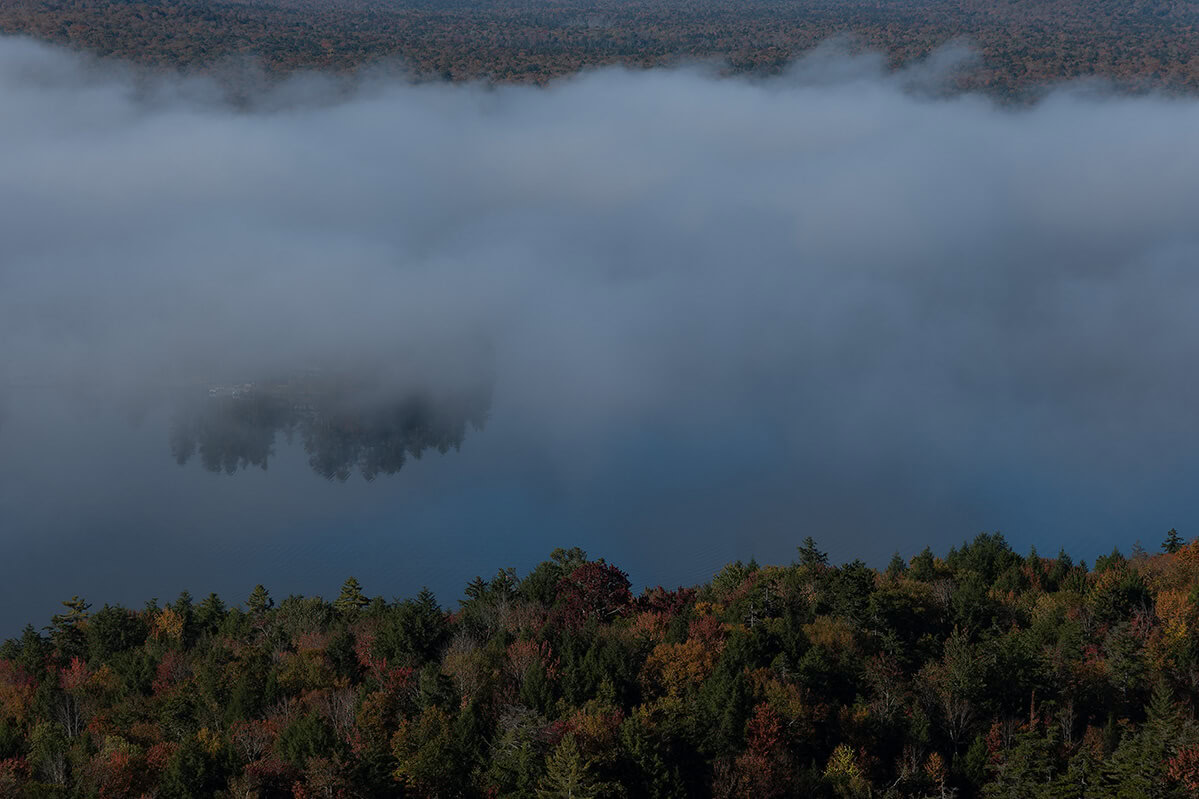
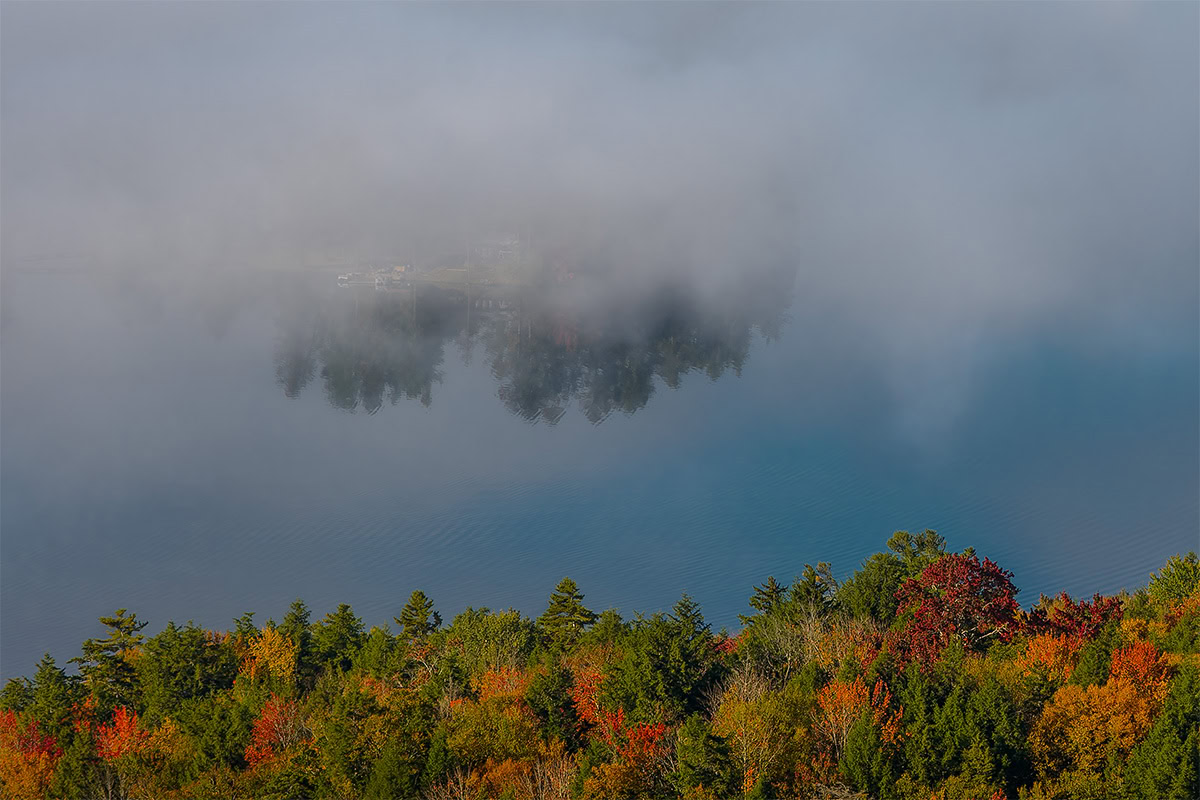
What surprised me—despite having watched lake fog lift from this vantage point many times—was seeing the islands almost entirely concealed while their reflections appeared so clearly in the water.
I photographed as many islands as I could fit into the frame, but eventually realized the image needed simplicity.
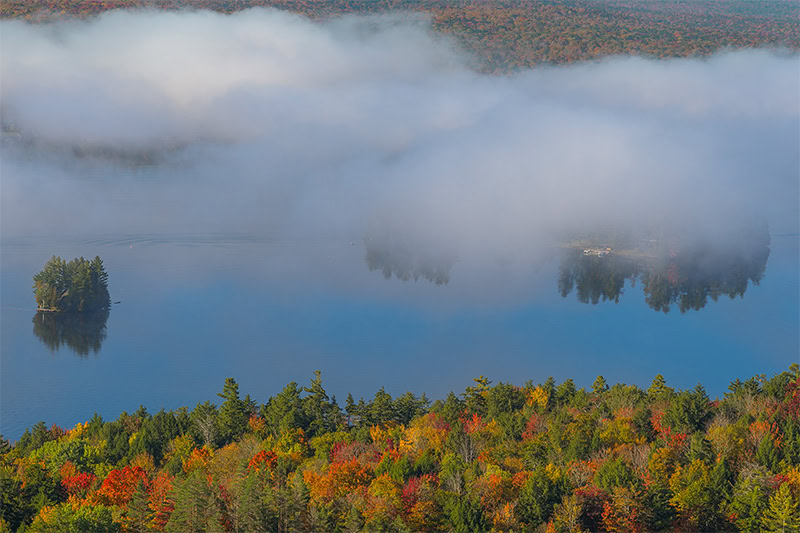
I’ll admit, I wished the fog had hidden the islands even more. Eliminating the visible camp and dock would have made the scene cleaner. Still, I was immediately drawn to how the upside-down conifer reflections blurred the line between reality and perception.
The trees appear to hang down from the clouds. The blue lake becomes the sky. The fall-colored shoreline becomes the land. For a moment, the image stops behaving the way we expect landscapes to behave.
I zoomed in on a single island and made it the focus. The scene wasn’t perfect—too much human infrastructure was visible—but I knew I could push the image further during processing, emphasizing the illusion of inverted trees floating in fog.
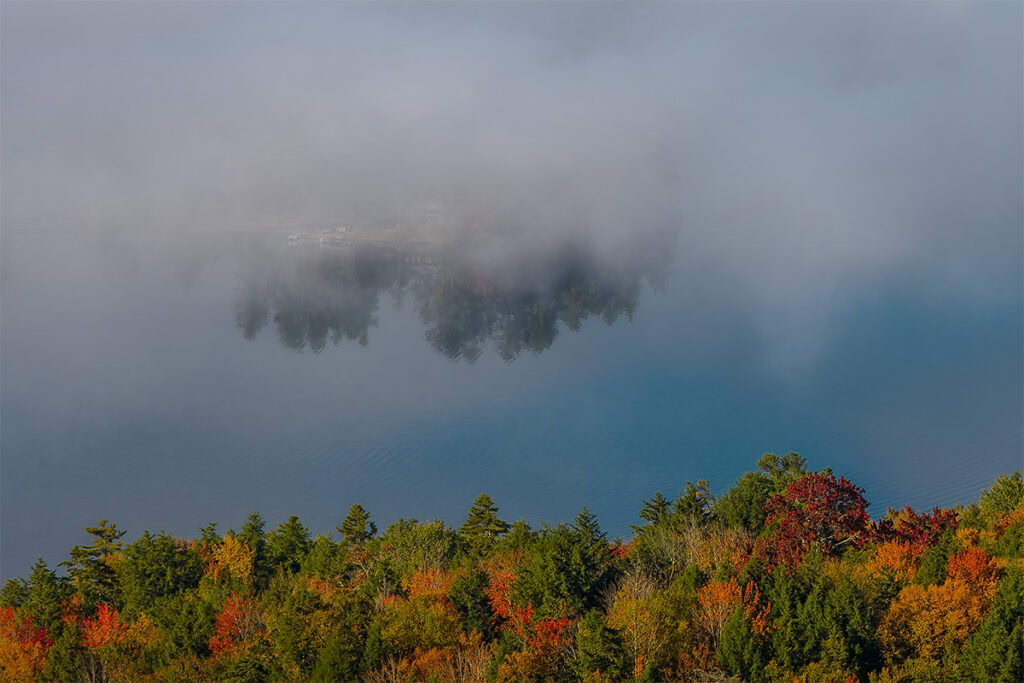
The work that followed wasn’t about inventing a mood or fixing flaws; it was about guiding the image back toward the quiet disorientation I experienced in that moment, and preserving the blurred line between reality and perception that first made me stop and look.
Before I delve into the editing process, I’d love to hear your thoughts.
What do you notice first?
How do the composition and colors feel to you?
Does the image make you pause—or question what you’re seeing?
Leave me a comment!
Join Behind The Image
Get the story behind my photos and quick editing tips delivered to your inbox every other Thursday.
It’s free—sign up below to receive the next issue!
Be sure to check your inbox after signing up to confirm your email address. If you don’t see the confirmation email in 5 minutes, check your spam folder. It’s a great idea to add to**@*******sh.com to your contacts to make sure the next Behind The Image makes it to your inbox.
Editing the Image
Here is a video of me editing the image using Adobe Camera Raw (same as Lightroom) and Photoshop using the TK9 Plugin.
Leave a Comment Below
If you have any questions, suggestions, or comments, leave them below, and I’ll get right back to you.
If you want to see a separate video on any of the techniques I used, or have questions, suggestions, or comments, leave them below, and I’ll get right back to you!