

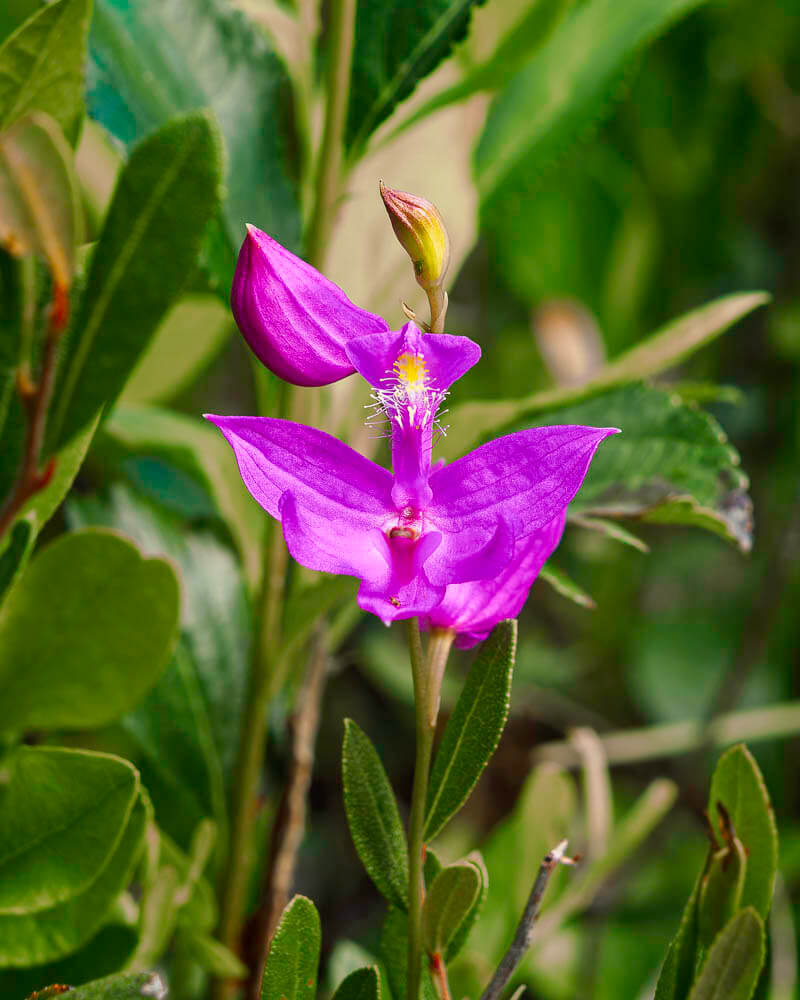
Visit to a Local Bog to Photography the Grass Pink Orchid
In late June I visited a local bog about an hour and a quarter from me to photograph the Grass Pink Orchids (Calopogon tuberosus).
We knew they would be blooming as myself and a friend visited a couple weeks prior and saw the thin grass-like leaves of the orchid and from previous experience we knew that late June would be perfect.
The Grass Pink Orchids were blooming I’d say about half-way through their blooming cycle. Not many were spent, but most if not all of the plants had flowers and many more buds ready to pop.
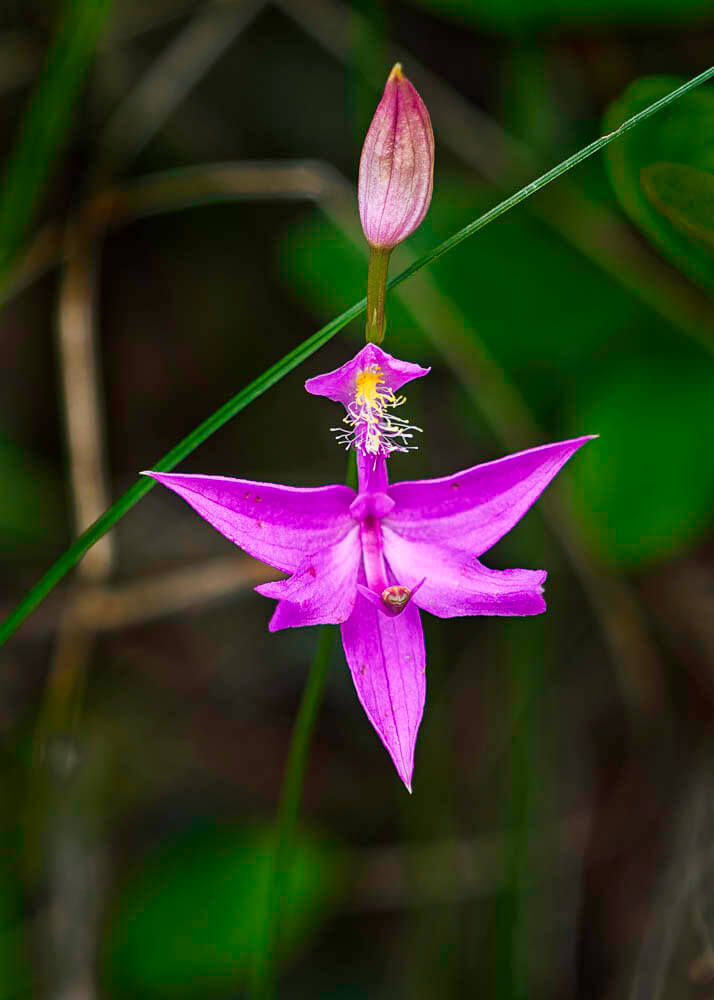
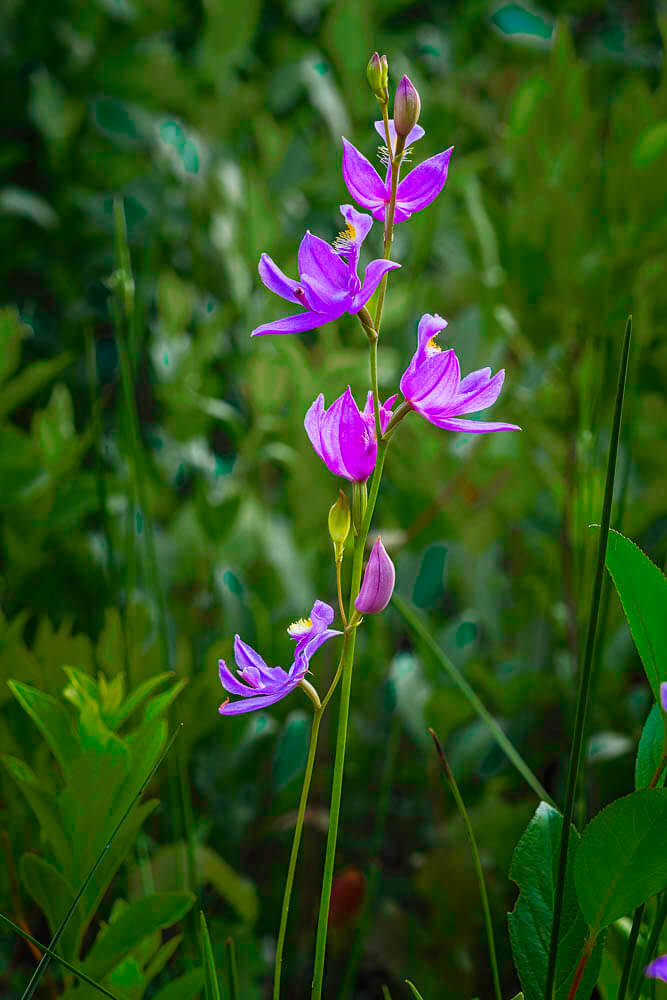
Below are some photos from this and previous visits to the bog when the Grass Pinks were blooming.


More Information on the Grass Pink Orchid
Botanical Description
Grass Pink is a terrestrial orchid with a slender green stem rising from a round corm. The stem grows 2–4 feet tall.
Usually one long, grass-like leaf emerges at the base. This smooth leaf is narrow (often about ¼–1½ inches wide) and up to 15 inches long. The central stem ends in a spike of 2–15 showy flowers.
Each bloom is about 1–2 inches wide and colored bright pink to magenta (white forms are rare). The flower has three spreading sepals and two standard petals, plus an upper “lip” (labellum) petal. The lip bears a tuft of club-shaped hairs (white, yellow or orange) that looks like a beard.
The pollen-bearing column sits beneath this lip. After flowering, each fertilized bloom forms an erect seed capsule (~¾ inch long) filled with tiny wind-dispersed seeds.
Ecology and Pollination
Grass Pink lives in sunny wetlands and plays a role in bog and fen ecosystems. It offers nectarless, visual cues for pollinators.
Bumblebees and other large bees are drawn to the hairy lip, mistaking it for pollen. When a bee lands, the hinged lip snaps downward, flinging the bee’s back into the column. Pollen masses stick to the bee and are transferred to the next flower it visits.
This trick works best on young (“naïve”) bees. Besides bees, the plant is not known to feed many animals. In fact, deer and other herbivores may browse on it, so it can be vulnerable to grazing.
Like all orchids, Grass Pink seedlings need special mycorrhizal fungi in the soil to grow. These fungal partners supply nutrients to the seeds and roots. Because of this fungal dependence, transplants often fail; wild orchids usually cannot be moved successfully.
Habitat and Identification
This orchid is found in wet, open places. Typical homes include bogs, fens, sedge meadows, wet pine savannas, and wet meadows.
It prefers full or partial sun and constantly moist, often acidic soil. Look for Grass Pink among sphagnum moss or sedges in spring and summer.
In bloom it is easy to spot by its bright pink flowers on a tall stem. Before bloom, identify it by the single long basal leaf and the unbranched smooth stem.
If you find a pink orchid in a bog with the lip on top (not below), it is likely Grass Pink. Note the flower’s signature tufted “beard” on the upper petal.
Similar Species
The only other Calopogon species in much of its range is Oklahoma Grass Pink (C. oklahomensis). Oklahoma Grass Pink has paler pink blooms and a lighter pink tuft on the lip. It usually flowers in May–June and grows on drier prairies or glades.
In contrast, Grass Pink blooms later (mainly June–July) and its stem is noticeably taller than its leaf when flowering.
Conservation and Threats
Grass Pink is globally secure (NatureServe G5) and common over much of eastern North America.
However, it is locally rare or endangered in parts of its range. For example, it is state-listed as endangered in Illinois, Kentucky, and Maryland, and “vulnerable” in New York.
The main threats are habitat loss and human disturbance.
Wetlands where it grows have been drained, overgrown by trees, or otherwise degraded. Collecting wild plants is a serious problem. Poachers sometimes dig up orchids for gardens, but most fail to survive in new locations due to their fungal needs.
In many states, Grass Pink is protected by law or discouraged from being picked.
Cautions and Ethics
Grass Pink is not edible; do not eat any wild orchid. Never dig up or disturb wild plants. Because Grass Pink relies on specific fungi, most wild-transplants die quickly.
This orchid’s habitat is fragile and often legally protected. If you spot Grass Pink, leave it intact. Enjoy the sight of it, but avoid picking flowers or trampling the ground around it.
Many wildflower guides emphasize viewing orchids only in place and taking photos instead.
Bloom Time and Where to See It
Grass Pink typically blooms in late spring to mid-summer. In the southern U.S. it can appear as early as March, but in most of the North its peak is June and July. For example, in New York its flowers usually open in late June and July.
To find Grass Pink, search in sunny bogs, fens, wet meadows or pine savannas during these months. Areas known for orchids or pitcher plants are good bets.
In bloom, look for the rose-pink spikes. The plants are easier to spot when in flower, so plan visits on warm days after the iris and before the bee balm.
If you found this information and the images helpful or enjoyable please consider a donation as I work on the Value for Value model.